


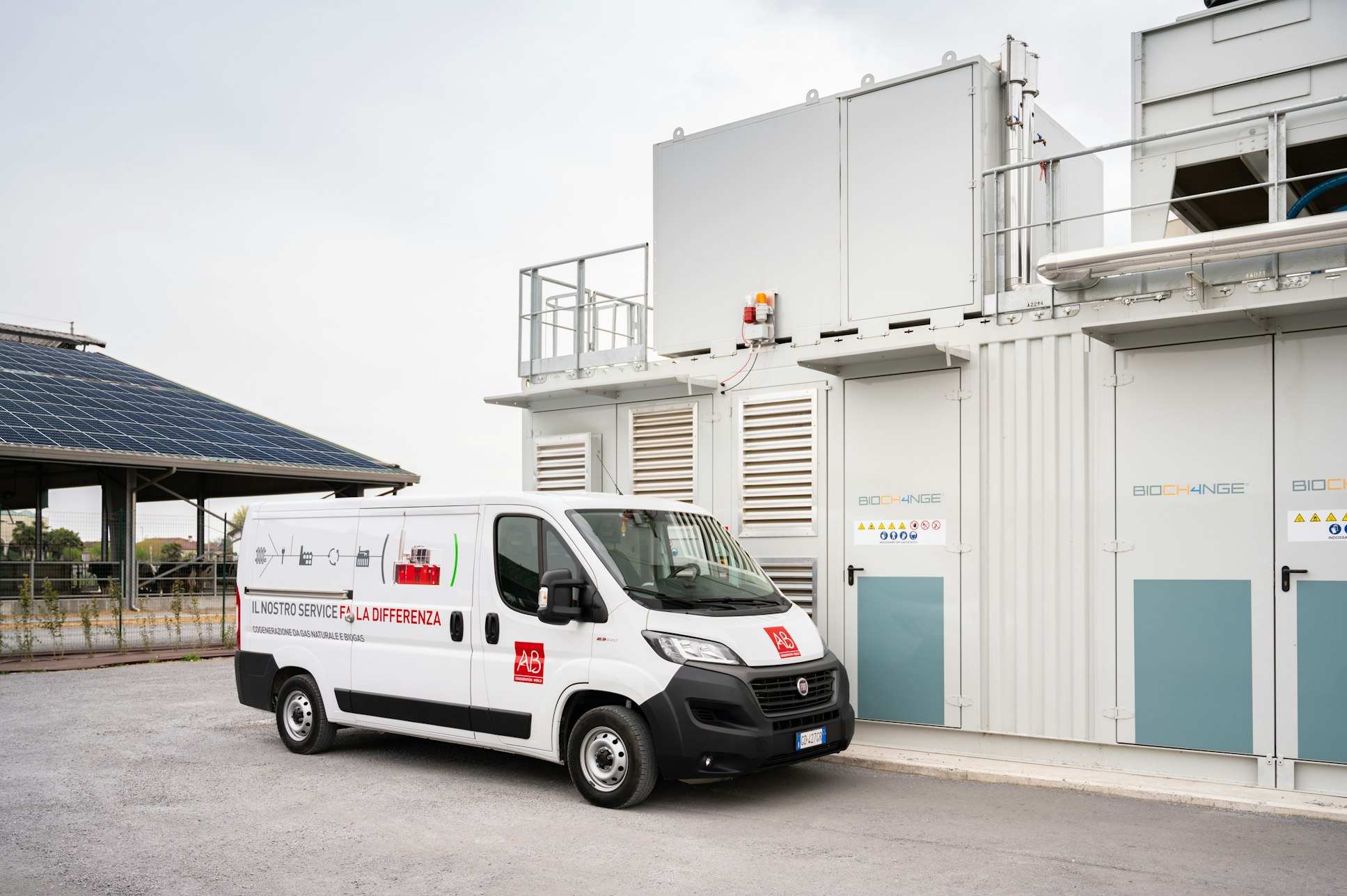
Agrisolar is a photovoltaic solution that involves installing solar panels on the roofs of buildings used for agricultural and agri-food activities, such as livestock barns, storage sheds, warehouses, food processing facilities, dairies, wineries, and greenhouses.
In this way, there is no land consumption: the system does not take land away from agricultural production but makes exclusive use of existing rooftops.
Agrisolar systems generally have a capacity ranging from 6 to 1,000 kWp, sized according to the company's self-consumption needs. The electricity generated supplies on-site loads such as refrigeration, processing operations, and climate control, reducing dependence on the electricity grid and exposure to energy price volatility.
How an Agrisolar System Works
The operating principle is the same as that of a traditional photovoltaic system: the panels installed on the roof capture solar radiation, the photovoltaic cells convert it into direct current (DC), and the inverter converts it into alternating current (AC) that can be used by the company's electrical loads.
The distinctive feature of agrisolar lies in its integration with an agricultural or agri-food building, together with all the technical implications this entails, including the structural load-bearing capacity of the roof, its orientation, and its integration with the electrical loads of the production processes.
In addition to the photovoltaic system, an integrated agrisolar project may include high-value complementary works such as the removal and disposal of asbestos roofing, roof thermal insulation, ventilation systems designed to improve animal welfare, and battery energy storage systems to extend self-consumption. The project therefore becomes a comprehensive refurbishment of the agricultural building.
The benefits of agrisolar for agricultural and agri-food businesses
The adoption of an agrisolar system addresses energy, environmental and, consequently, economic objectives:
Structural reduction of electricity costs through self-consumption and reduced exposure to energy price volatility.
Enhancement of existing rooftops as productive assets, without any consumption of agricultural land.
Reduction of CO₂ emissions and replacement of asbestos roofing with safe, insulated materials.
Strengthening of the company's ESG profile and commercial positioning with supply chains and large-scale retailers that require suppliers with a low environmental impact.
Agrisolar and agrivoltaics: two complementary technologies
The two terms are often confused, but they refer to different solutions. Agrivoltaics involves installing photovoltaic panels directly on agricultural land, on elevated structures or between crop rows, while allowing farming or livestock activities to continue.
The MASE guidelines require the continuity of agricultural or livestock activities and set specific requirements for the integration of energy production and agricultural cultivation, including obligations to monitor agricultural and energy performance over time. Agrisolar, by contrast, applies exclusively to the roofs of agricultural buildings and does not interfere in any way with the cultivation of the land.
| Feature | Agrisolar | Agrivoltaics | Ground-mounted photovoltaics |
|---|---|---|---|
| Location | Roofs of agricultural buildings | Agricultural land | Directly on the ground |
| Land consumption | None | None (coexistence) | Yes |
| Farming activity | Unaffected | Ongoing, integrated | Excluded |
| Main beneficiaries | Livestock farms, dairies, agri-food industry | Farmers with cultivated land | Energy operators |
For many businesses, these represent complementary solutions that can be adopted in parallel, depending on the available surface area and production objectives.
Agrisolar, cogeneration and biomethane: an integrated energy model
Agrisolar meets part of a company's energy demand, but not all of it. Photovoltaic generation is inherently intermittent: it is concentrated during daylight hours, subject to weather variability, and does not produce thermal energy. For agricultural and agri-food businesses with continuous electricity and heat requirements, agrisolar alone cannot guarantee energy self-sufficiency.
In these contexts, combining agrisolar with cogeneration is a particularly effective solution. Biogas cogeneration plants developed by AB, through its proprietary ECOMAX® system, simultaneously produce electricity and thermal energy, operating 24 hours a day, 365 days a year.
In the agricultural sector, the cogeneration unit and the photovoltaic system work together to power biomethane production, creating an efficient and self-sufficient energy ecosystem. In these plants, the optimal management of the different energy carriers becomes crucial. This is the role performed by ABtimizer, the software developed by AB that acts as a true energy management brain.
By analysing production and consumption data in real time, ABtimizer coordinates the cogeneration unit, the biogas upgrading plant, the photovoltaic panels and the energy storage systems. It determines, moment by moment, when to produce, consume, store or feed electricity into the grid, based on an objective function that evaluates costs, revenues and the plant's energy requirements.
ABtimizer pursues two fundamental objectives: maximising the self-consumption of the energy produced and ensuring that this self-consumption remains efficient and sustainable over time. In biomethane plants, more efficient self-consumption management makes a greater quantity of biogas available for upgrading, increasing biomethane production while strengthening the plant's operational reliability. Energy management therefore becomes a strategic driver of competitiveness.
This is a path fully aligned with ABetter Way, the vision promoted by AB as a global benchmark for sustainable energy solutions.
Frequently asked questions about agrisolar
