


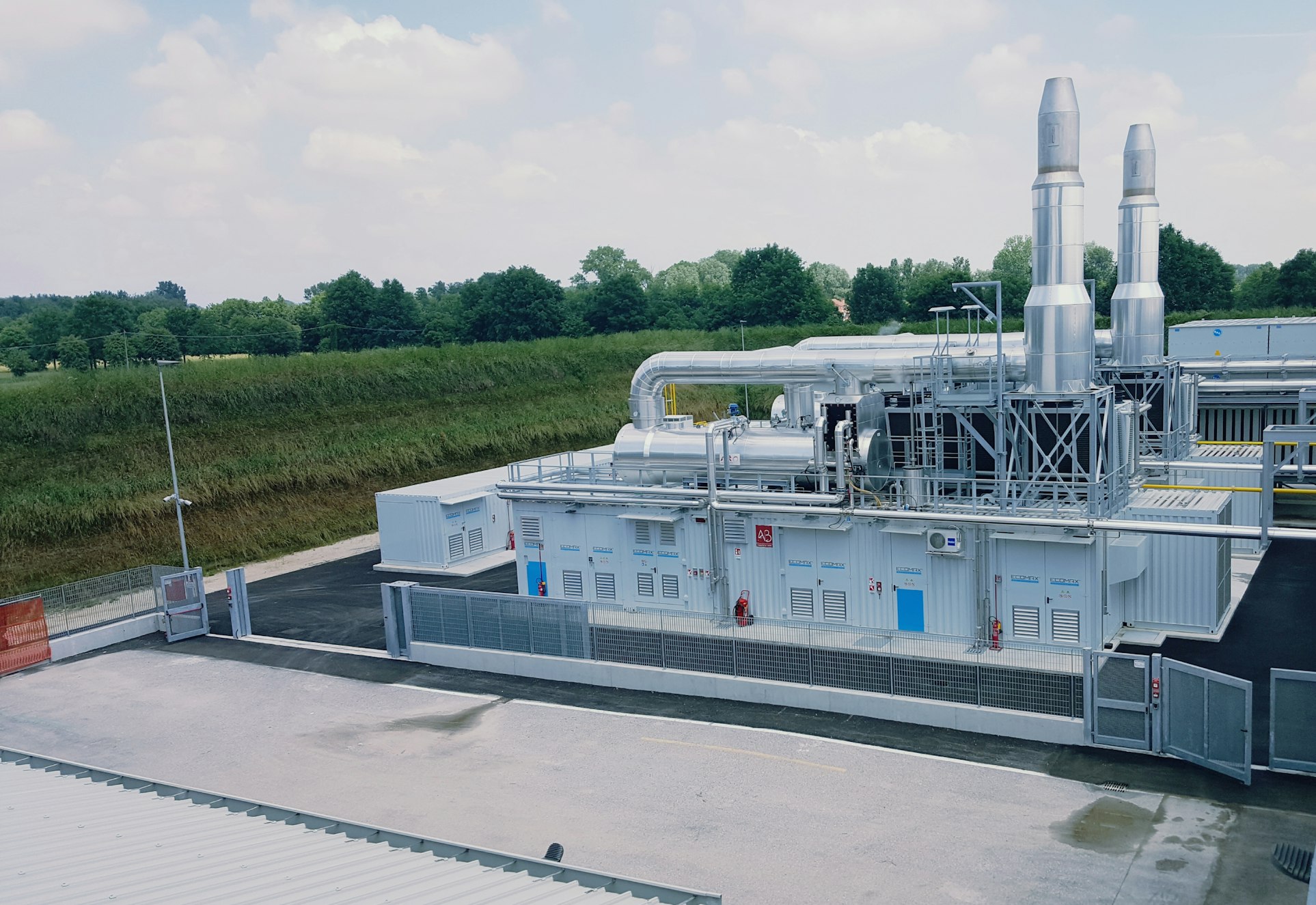
Cogeneration, also known as CHP (Combined Heat and Power), is the combined production of electrical (or mechanical) energy and heat from a single primary energy source within one integrated system. The fuel can be natural gas, special gases, biogas, biomethane or hydrogen.
Microcogeneration applies the same principle on a smaller scale: regulations define microcogeneration units as plants with an electrical capacity below 50 kWe. The difference between the two solutions therefore lies not in the operating principle, but in their size and, consequently, in the users they serve, system sizing and incentive mechanisms.
How a cogeneration plant works
A cogeneration plant consists of an Otto-cycle engine that produces mechanical energy and transfers it to an alternator to generate low-voltage electricity, which is subsequently transformed into medium-voltage electricity. Heat recovery takes place in two ways: from the engine cooling water, through a plate heat exchanger that makes it possible to obtain high-temperature water, and from the exhaust gases which, at temperatures close to 400°C, can be used to produce hot water, superheated water, steam or thermal oil, or can be used directly in the production process.
This configuration applies to plants of all sizes: what changes between cogeneration and microcogeneration is the installed capacity and the energy demand of the user served by the plant.
What is microcogeneration?
Under Italian regulations, a microcogeneration unit is a cogeneration unit with an electrical capacity below 50 kWe; small-scale cogeneration refers to units with a capacity of up to 1 MWe. Above these thresholds are medium- and large-scale cogeneration plants, which can reach capacities of several MWe.
This distinction has an important practical consequence for recognition as High-Efficiency Cogeneration (CAR): a unit with a capacity equal to or greater than 1 MWe is defined as high-efficiency if its primary energy savings (PES) are at least 10% compared with separate production, while for micro- and small-scale cogeneration units, any positive PES value is sufficient.
The differences at a glance
| Caratteristica | Microcogenerazione | Cogenerazione |
|---|---|---|
| Potenza elettrica | Inferiore a 50 kWe | Da 50 kWe a diversi MWe (piccola cogenerazione fino a 1 MWe) |
| Principio di funzionamento | Produzione combinata di elettricità e calore | Identico, su scala maggiore |
| Utenze tipiche | Fabbisogni energetici contenuti e continui | Realtà energivore: industria, terziario, sanità, data center |
| Requisito CAR | PES di qualunque valore positivo | PES di almeno il 10% (unità da 1 MWe in su) |
Which solution to choose: the role of system sizing
Cogeneration is particularly suitable for energy-intensive businesses characterized by high and continuous demand for heat and electricity: food and beverage, chemical-pharmaceutical, plastics, paper and textile industries, as well as hospitals, data centers, hotels, shopping centers, universities and district heating networks. Microcogeneration follows the same principle for users with lower energy requirements, provided that demand remains constant over time.
To achieve maximum performance, selecting the right system size is essential. A feasibility study is the key tool: it makes it possible to determine whether a company has the right characteristics for this technology by assessing technical feasibility, economic benefits and return on investment.
The benefits of combined production
Regardless of system size, the simultaneous production of electricity and heat offers energy, environmental and, consequently, economic benefits:
Fuel utilization efficiency of up to 85%, with a reduction of more than 30% in primary energy consumption compared with separate production
On-site self-consumption: transmission and distribution losses from electricity grids are avoided
Lower CO₂ and greenhouse gas emissions; with biogas or biomethane, fossil CO₂ emissions are eliminated
Resilience: island mode ensures a continuous energy supply even in the event of a blackout, a crucial factor for critical facilities such as hospitals and data centers
Energy bill savings and access, for CAR units, to the White Certificate mechanism: the GSE awards one certificate for each TOE of savings achieved, which can be traded on the GME platform
Frequently asked questions about microcogeneration and cogeneration
What is meant by microcogeneration?
A cogeneration unit with an electrical capacity below 50 kWe. The operating principle is the same as cogeneration: the combined production of electricity and heat from a single primary energy source.
Does microcogeneration work differently from cogeneration?
No. The installed capacity and the users served change, not the operating principle: engine, alternator and heat recovery from cooling water and exhaust gases are the same, on a smaller scale.
When is a plant recognized as CAR?
A unit with a capacity equal to or greater than 1 MWe qualifies as high-efficiency if its PES is at least 10%; for micro- and small-scale cogeneration units (below 1 MWe), any positive PES value is sufficient. CAR recognition provides access to White Certificates.
What efficiency can a cogeneration plant achieve?
Fuel utilization efficiency can reach up to 85%, with a reduction of more than 30% in primary energy consumption compared with the separate production of electricity and heat.
