


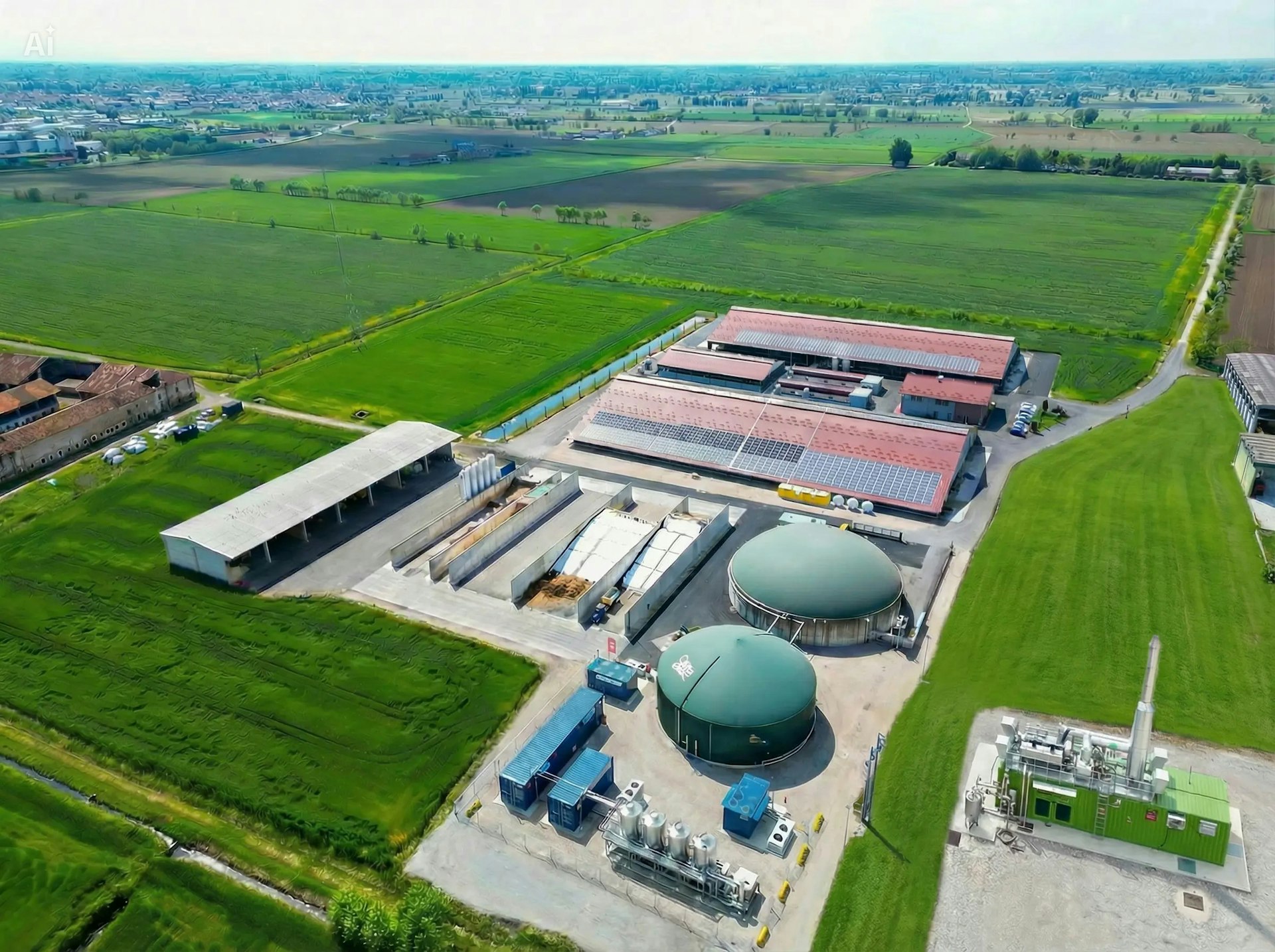
Biogas is a natural gaseous fuel composed of 50–70% methane, produced through the anaerobic digestion of organic residues. Biomethane is the result of its purification through an upgrading process: a gas containing 94% methane, comparable to fossil natural gas and suitable for direct injection into the gas distribution network. These are two renewable resources that share the same biological origin but differ in composition, applications, and potential uses.
What is biogas?
Biogas is formed when specialized bacteria digest organic matter in the absence of oxygen. This process takes place inside sealed tanks called digesters, at a temperature of around 35°C. The process consists of three stages: first, bacteria break down the organic matter into smaller components; then, acid fermentation produces acids and CO₂; finally, archaea convert that CO₂ into methane.
What can be fed into a digester? Virtually any type of organic residue:
Livestock slurry and manure
Food industry by-products (whey, grape pomace, fruit waste, etc.)
Straw, corn stalks, and other agricultural residues
The organic fraction of municipal solid waste (OFMSW)
Sewage sludge
In addition to biogas, the digester also produces digestate: a nitrogen-rich material that acts as a natural fertilizer, replacing chemical fertilizers.
The biogas produced is usually sent to a cogeneration plant. There, an internal combustion engine burns it to simultaneously generate electricity and heat. Renewable energy produced from waste.
What is biomethane and how does it differ?
Biomethane is a gas derived from biogas that has undergone a purification process known as upgrading. During this treatment, CO₂ and contaminants are separated from the methane, resulting in a clean fuel whose use significantly reduces CO₂ emissions.
The fundamental difference compared to natural gas lies in its origin: fossil methane was formed over millions of years beneath the Earth's surface and is a finite resource; biomethane is produced from waste biomass (biogenic waste or residual materials), which grew by capturing CO₂ from the atmosphere through photosynthesis powered by solar energy, making it a renewable energy source.
Biomethane is also considered carbon neutral: its use does not result in net positive CO₂ emissions into the atmosphere, making it much more sustainable than fossil gas. Furthermore, its production process contributes to the return of organic matter to the soil.
The main applications include:
Injection into the gas grid, making use of existing transmission and distribution infrastructure
Vehicle fuel (Bio-CNG) for natural gas-powered vehicles
Heavy-duty transport (Bio-LNG): 600 litres of gaseous biomethane produce just one litre of Bio-LNG, making it ideal for long-distance transport with almost double the driving range compared to compressed gaseous biomethane
Energy production in cogeneration plants and district heating networks. Biomethane is easier to transport and can be converted close to the point of use, making thermal energy recovery more efficient.
The differences at a glance
| Biogas | Biomethane | |
|---|---|---|
| Methane | 50-70% | ~97% |
| Residual CO₂ | Up to 50% | Less than 2% |
| Equivalent to natural gas? | No | Yes |
| Can it be injected into the grid? | No | Yes |
| Typical use | Cogeneration (ECOMAX® Biogas) | Gas grid, transport, industry |
| Does it require treatment? | Yes, conditioning treatments | Yes, upgrading (BIOCH4NGE®) |
| Physical form | Gas | Gas (Bio-CNG) or liquid (Bio-LNG) |
The choice between the two solutions depends on the operational context. A biogas cogeneration plant is the right choice when a company requires both electricity and heat on site. Biomethane production is the optimal solution for those looking to maximize the value of renewable gas through grid injection or its sale as a biofuel.
The two options are not mutually exclusive: hybrid configurations in which part of the biogas feeds the ECOMAX® cogeneration system and the remainder is sent for upgrading with BIOCH4NGE® make it possible to maximize both flexibility and economic returns.
The upgrading process: from biogas to biomethane
There are several upgrading technologies available on the market, based on different physicochemical principles for gas separation. Membrane technology is the most widespread and widely used worldwide: polymer membranes with selective permeability separate CH₄ from CO₂, ensuring optimal purification without the use of chemicals.
The process consists of three stages:
Biogas filtration: removal of water and contaminants, followed by compression and cooling
Purification: treatment using activated carbon beds in a "Lead-Lag" configuration, ensuring continuous operation
Upgrading: separation of methane from CO₂, producing biomethane at a pressure between 7 and 15 bar, ideal for injection into the gas grid
The advantages of this technology include operational simplicity, high efficiency with low energy consumption, scalability, and flexibility, including part-load operation for future plant expansions.
To complete the ecosystem, solutions can also be integrated for liquefying biomethane into Bio-LNG through a cryogenic process, and for recovering biogenic CO₂ through cryogenic distillation, producing liquid bio-CO₂ with a purity greater than 99.9%, suitable for the food and chemical industries.
Benefits of biogas and biomethane
Circular economy. Biogas and biomethane transform livestock, agro-industrial, and municipal waste into renewable energy. Digestate can be used instead of chemical fertilizers, reducing agricultural production costs while increasing the soil's capacity to store carbon.
Energy independence. Local biomethane production reduces dependence on foreign imports, diversifies the energy mix, and ensures more competitive energy prices. If supported by appropriate legislation, biomethane production plants could contribute up to 10% of all gas consumed in the European Union by 2030.
