


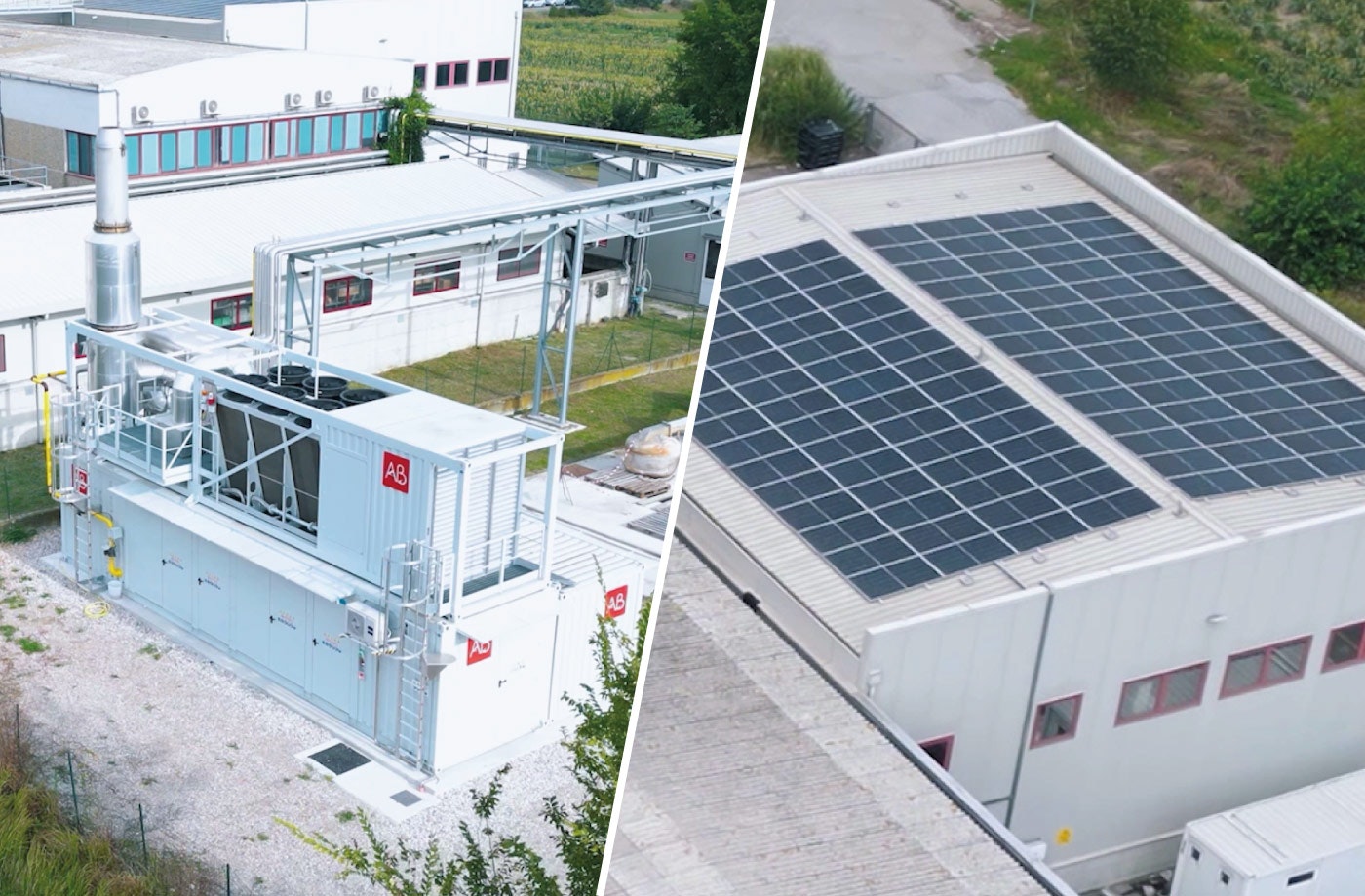
For companies pursuing energy efficiency and decarbonization goals, integrating photovoltaics with cogeneration is now one of the most effective solutions available. It combines the continuous and dispatchable energy production of cogeneration with the renewable power generated by photovoltaic systems, reducing costs, emissions, and dependence on the grid.
Gruppo AB, with more than 40 years of experience, provides integrated solutions that combine ECOMAX® cogeneration technologies with photovoltaic systems, managed through the proprietary ABtimizer software to optimize energy production in real time.
What Is the Integration of Photovoltaics and Cogeneration?
The integration of cogeneration and photovoltaics refers to a system in which the two technologies operate synergistically within a single energy solution: cogeneration (CHP) simultaneously produces electricity and thermal energy from a single fuel source, while photovoltaics generate electricity from solar radiation.
This configuration enables on-site energy production, minimizing grid losses and maximizing the contribution of renewable energy sources.
The Role of Cogeneration
Natural gas cogeneration provides the dispatchable component of the system, delivering energy continuously and reliably regardless of weather conditions. ECOMAX® cogeneration plants produce both electrical and thermal energy in the form of hot water, superheated water, steam, thermal oil, or chilled water (in the case of trigeneration).
A continuous supply of electrical and thermal energy is essential in energy-intensive sectors such as the food and beverage industry.
The Contribution of Photovoltaics
Photovoltaics represent the non-dispatchable renewable component of the system, providing electricity generation with no direct emissions, an operational lifespan exceeding 30 years, and minimal maintenance requirements.
However, energy production depends on solar irradiance and is inherently intermittent. Cogeneration automatically compensates for this variability: the ECOMAX® cogeneration unit operates during periods of low or no solar generation, ensuring 24/7 operational continuity.
ABtimizer: Intelligent Optimization Software
ABtimizer is Gruppo AB’s proprietary software that orchestrates the integration of cogeneration and photovoltaics, transforming it into an optimized energy system.
How ABtimizer Works
The software collects real-time data from ECOMAX® production units, photovoltaic output, energy consumption, storage system status, and gas and electricity market prices. Based on this information and solar irradiation forecasts, it plans the optimal modulation of the cogeneration unit.
Its operating logic prioritizes photovoltaic energy whenever it is available. On days with high solar irradiance, ABtimizer automatically reduces the use of the cogeneration unit for electricity generation. In situations where the cogeneration unit is required to produce steam or hot water essential to industrial processes, the software keeps it running and modulates its operation to maximize thermal production, avoiding the activation of alternative boilers and helping to reduce operating costs.
The Benefits of Integration
Economic Benefits
By combining cogeneration and photovoltaics, companies gain a twofold advantage: continuous on-site energy production that eliminates grid losses and a share of electricity generated at virtually zero marginal cost during daylight hours. ABtimizer balances the two energy sources to maximize self-consumption and minimize electricity imports from the grid.
Reliability and Operational Continuity
Cogeneration provides continuous power regardless of the status of the national electricity grid, a crucial capability for facilities that require uninterrupted energy supply. When solar irradiance decreases or is no longer available, the ECOMAX® cogeneration unit steps in to meet both electrical and thermal demand, ensuring 24/7 operational continuity.
Environmental Sustainability
This integrated approach reduces the overall carbon footprint of the facility. Photovoltaic systems generate electricity without direct emissions, while high-efficiency cogeneration minimizes fuel consumption compared with the separate production of electricity and heat.
Case Study: Lactalis
The collaboration between Lactalis and Gruppo AB covered the entire plant implementation cycle, from the pre-commissioning phase through to ongoing post-installation technical support. The process included permit management, the installation of cogeneration and photovoltaic systems, and the activation of a technical assistance service provided both remotely and on-site.
The project involved the integration of a cogeneration plant with an installed capacity of 0.9 MW and a 60 kW photovoltaic system, installed in 2024.
The strategic objective was to achieve energy self-generation through the integration of both systems, covering the energy requirements of production processes and reducing the plant’s environmental footprint.
Results Achieved
Energy and Economic Optimization: The integration enabled the Lactalis facility to achieve a significant reduction in energy costs by optimizing the balance between self-generation and electricity drawn from the grid.
Reduction of Environmental Impact: The installation resulted in a measurable decrease in the plant’s carbon footprint, particularly with regard to CO₂ emissions, contributing to the achievement of the company’s energy, environmental and, consequently, economic objectives.
Energy Self-Sufficiency: The operational synergy between cogeneration and photovoltaics enables Lactalis to minimize electricity withdrawals from the national grid, maximizing the coordinated use of both energy sources for on-site self-generation.
Operational Continuity and Reliability: The 24/7 remote and on-site monitoring and control service provided by Gruppo AB ensures the operational continuity of the plants, minimizing downtime through timely predictive and corrective maintenance interventions.
Why Choose Gruppo AB Solutions
Gruppo AB is a global benchmark for sustainable energy solutions, with expertise built over 40 years of activity in the fields of cogeneration, trigeneration, and biogas and biomethane valorization. Gruppo AB’s integrated approach enables the simultaneous optimization of technical, environmental, and economic performance, ensuring tailored solutions for every industrial sector.
The integration of photovoltaics and cogeneration is now a practical solution for companies seeking to reduce energy costs, increase self-sufficiency, and accelerate their decarbonization journey, while maintaining reliability and production continuity.
Further Reading
